

Sounds Lost But Not Forgotten: The Hot Air Duo - Flute & Pipe Organ
Sounds Lost But Not Forgotten: The Hot Air Duo - Flute & Pipe Organ





Sounds Lost But Not Forgotten: The Hot Air Duo - Flute & Pipe Organ
Raven OAR-173
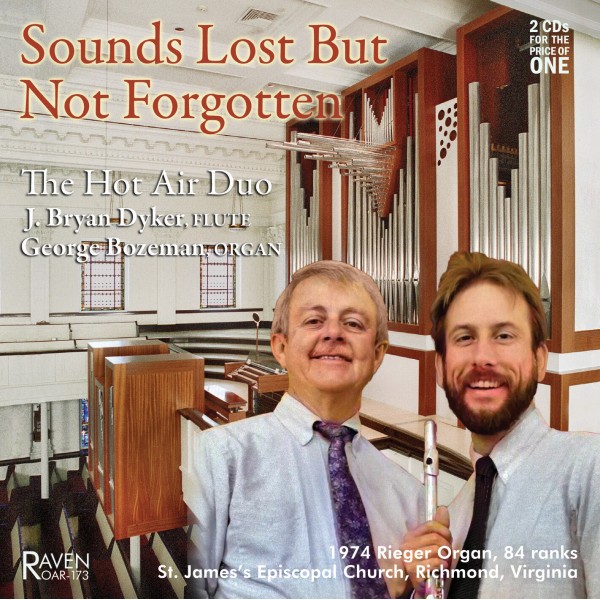
George Bozeman and J. Bryan Dyker, organbuilders as well as super
musicians, combined as The Hot Air Duo (flute and organ). They
brilliantly performed live concerts in 1991 and 1992 with the 1974
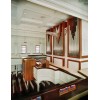
Rieger (84 ranks) at St. James’s Episcopal Church, Richmond, Virginia.
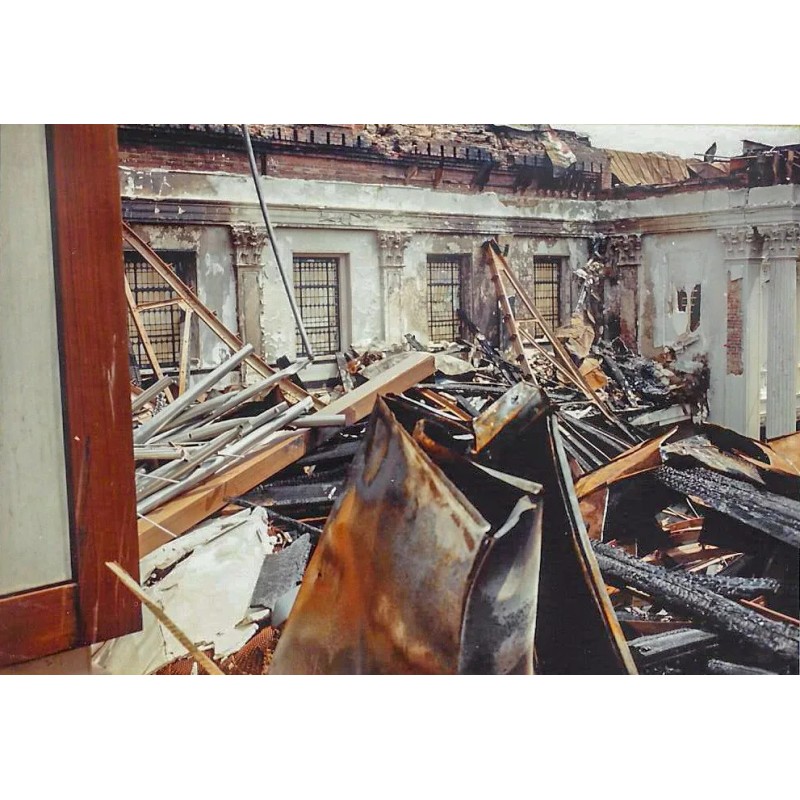
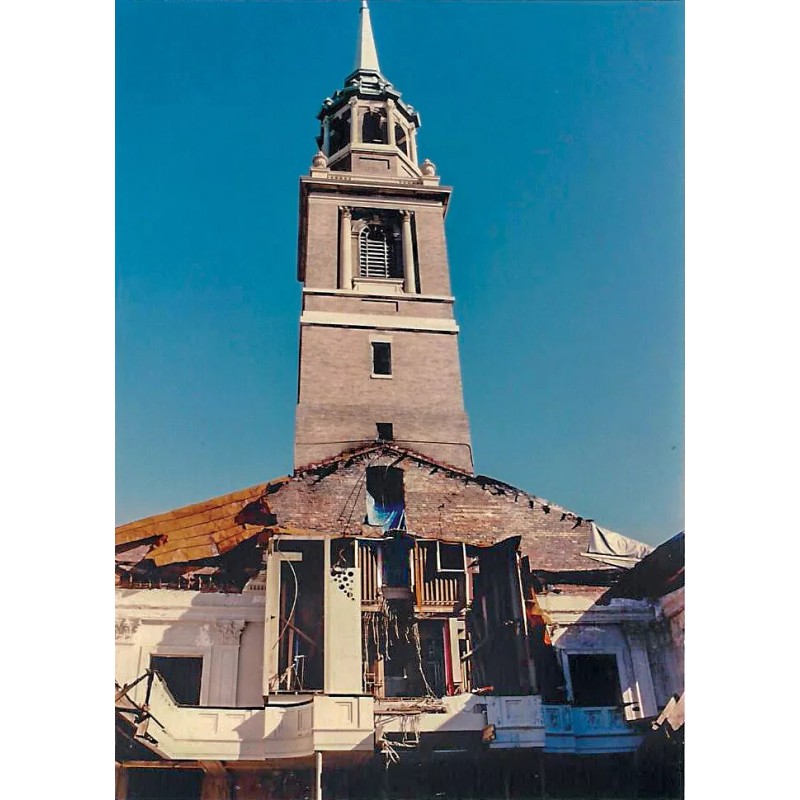
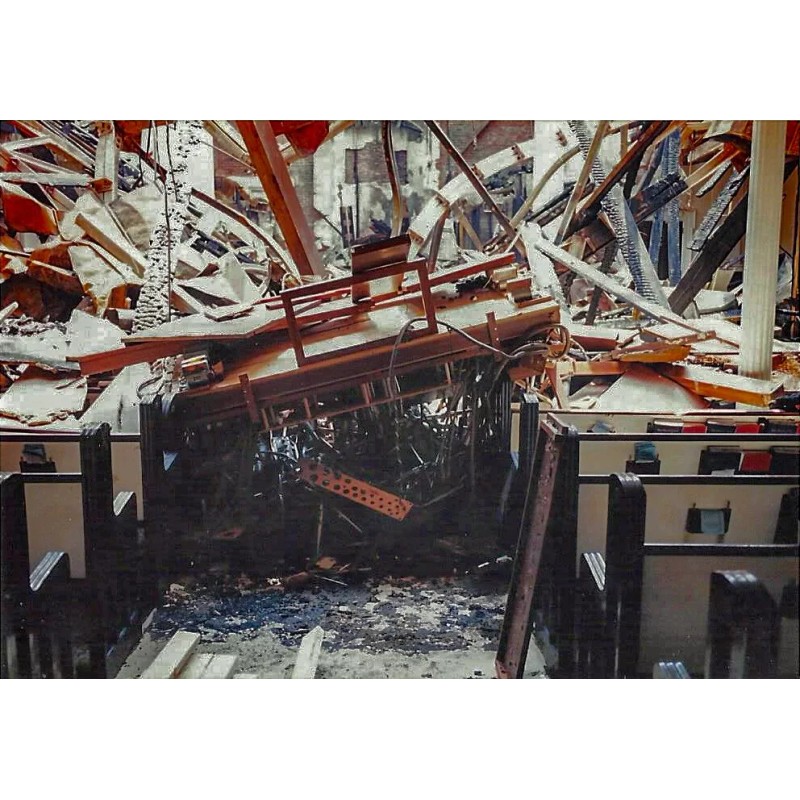
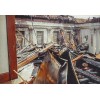
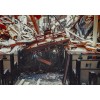
The organ burned in 1994 and Bryan died the same year at age 37, the
youngest Organ Historical Society member when he joined at age 13.
FLUTE & ORGAN:
Everett Titcomb 1884-1968: The Hedding Suite
Allegro · Alla menuetto · Andante cantabile · Vivace (Scherzo)
Otto Nicolai 1810-1849: Potpourri from The Merry Wives of Windsor (arr. Hofmann)
Gabriel Fauré 1845-1924: Berceuse, op. 16
Maurice Ravel 1874-1937: Vocalise-Étude en forme de Habanera
Paul Hindemith 1895-1963: Echo
Paul Hindemith 1895-1963: Sonata for Flute and ClavierHeiter bewegt · Sehr langsam · Sehr lebhaft · Marsch
Ernst Pepping 1901-1981: Sonata for Flute and ClavierAllegro cantabile · Quieto · Animato
Augustus Franciscus Kropfreiter 1877-2003: Four Pieces for Flute and OrganVery peaceful, quick · Slowly · Spirited movement · Very peaceful
Emil Petrovics 1930-2011: Hungarian Children’s Songs:No. 3, Life is Beautiful · No. 4, Where have you been, my little Lamb? · No. 6, The Tree of Life · Nos. 7 & 8, The Ferry Man and My new Boots have no Soles
FLUTE ALONE:
Robert Muczynski 1829-2010: Three Preludes for Flute Alone
Allegro · Andante molto · Allegro molto
Sigfrid Karg-Elert 1877-1933: Sonata Appassionata in F-sharp Minor for Solo Flute, op. 140
ORGAN ALONE:
Béla Bartók 1881-1945: Mikrokosmos (transcribed for organ by G. B.):
No. 2 of Six Dances in Bulgarian Rhythm, Vol. VI, 149
No. 5 of Six Dances in Bulgarian Rhythm, Vol. VI, 152
Fifth Chords, Vol. IV, 120
Ernst Pepping 1901-1981: from Kleines Orgelbuch:Vom Himmel hoch, da komm ich her:
Allegretto cantabile · Scherzando · Pastorale
Es kommt ein Schiff geladenFreuet euch, ihr Christen alle
Zengt an die Macht, du Arm des Herm
Sonne der Gerechtigkeit
The Music
by George Bozeman
The Music on CD 1:
Native of Amesbury, Massachusetts, Everett Titcomb (1864-1968) was organist and choirmaster at Saint John the Evangelist Church in Boston for much of his career. The Hedding Suite was composed at Camp Hedding, New Hampshire, where he spent many summers, and published in 1962. Titcomb writes: “Camp Hedding is a beautiful tract of woodland with hundreds of acres of lofty pines through which the wind and breezes make music. At the time the Suite was composed, the haunting tones of a flute played by Frances Drinker could be heard, creating a truly woodland symphony.”
A wealth of short salon pieces for flute and piano include the Fauré, Ravel, and Hindemith numbers, and their piano parts adapt effectively to the idiom of the organ. Gabriel Fauré (1845-1924) composed the Berceuse around 1879 for violin or cello and piano. Published in 1880 to a popular reception and widely played by various combinations of instruments, Fauré composed in 1880 a version for violin and orchestra.
by George Bozeman
The Music on CD 1:
Native of Amesbury, Massachusetts, Everett Titcomb (1864-1968) was organist and choirmaster at Saint John the Evangelist Church in Boston for much of his career. The Hedding Suite was composed at Camp Hedding, New Hampshire, where he spent many summers, and published in 1962. Titcomb writes: “Camp Hedding is a beautiful tract of woodland with hundreds of acres of lofty pines through which the wind and breezes make music. At the time the Suite was composed, the haunting tones of a flute played by Frances Drinker could be heard, creating a truly woodland symphony.”
A wealth of short salon pieces for flute and piano include the Fauré, Ravel, and Hindemith numbers, and their piano parts adapt effectively to the idiom of the organ. Gabriel Fauré (1845-1924) composed the Berceuse around 1879 for violin or cello and piano. Published in 1880 to a popular reception and widely played by various combinations of instruments, Fauré composed in 1880 a version for violin and orchestra.
Maurice Ravel (1875-1937) composed Vocalise-Étude en forme de Habanera for bass voice and piano in 1907 and published it in 1909.
Paul Hindemith (1895-1963) composed Echo for Flute and Clavier in 1942 and published in it in 1945.
Otto
Nicolai (1810-1849) ran away from an unhappy home in Königsberg,
Prussia, at the age of sixteen. Poorly educated in everything except
piano, he rose to become a popular composer of opera and a distinguished
conductor. He founded the Vienna Philharmonic Concerts in 1842 with
the object of giving fine performances of Beethoven’s Symphonies. In
1847, after a farewell concert to Vienna which included Jenny Lind’s
singing and excerpts from his Merry Wives of Windsor, he moved to
important positions in Berlin, where he completed his most famous
opera. It opened to brilliant success on March 9, 1849, but he had
scant time to enjoy it, dying of a stroke two months and two days later.
I found the Richard Hofmann (1844-1918) arrangement, published in
1894, in a second-hand store in Weimar several years ago; according to
advertisements printed with it, Hoffman published dozens of operatic Potpourris über beliebte Melodien aus klassichen und modernen Opern und Oratorien
(Potpourris on popular Melodies from classical and modern operas and
oratorios) arranged in 17 variations of instrumentation for solo or
groups of violin, two violins, viola, ‘cello, flute, and piano.
Robert
Muczynski (1929-2010) composed these three preludes in 1962. They, and
his Sonata for flute and piano from 1961, have become standard flute
repertoire among his many chamber music compositions. As well, his
orchestral works were widely performed by American orchestras. A native
of Chicago, he received undergraduate and graduate degrees in piano at
DePaul University, then taught composition at DePaul, as well as at
Roosevelt University, at Loras College in Dubuque, Iowa, and, from 1965,
at the University of Arizona-Tucson, where he was both chairman of
composition and composer-in-residence. His style is bright,
cheerful, and extremely effective for solo flute.
Ernst
Pepping was born in Duisburg, Germany, in 1901 and studied under Walter
Gmeindl at the Berlin High School for Music. After his appointment as a
professor at the School of Church Music in Spandau, near Berlin, he
devoted his composition largely to this field, and was considered the
leading exponent of new German Protestant church music. His Spandauer
Chorbuch written 1934-1938 comprises twenty volumes of choral pieces
for the liturgical year in two- to six-part settings. Pepping’s style in
the chorale preludes is free yet closely knit, and there is a certain
inherent archaism, all of which makes him a fine example of the
neo-baroque school. The Sonata for Flute and Clavier, composed 17 years
later, is somewhat less tonal in style.
The Music on CD 2:
In this program played by the Hot Air Duo in 1991, only the works by Kropfreiter and Karg-Elert were performed on the instruments specified by their composers. All the rest are transcriptions of one sort or another. We are always looking at familiar music with an eye to enriching our particular repertory for flute and organ.
The Music on CD 2:
In this program played by the Hot Air Duo in 1991, only the works by Kropfreiter and Karg-Elert were performed on the instruments specified by their composers. All the rest are transcriptions of one sort or another. We are always looking at familiar music with an eye to enriching our particular repertory for flute and organ.
Augustus
Franz Kropfreiter (1936-2003) was the organist at the large church of
the Augstinian monastery in St. Florian, where Anton Bruckner had been a
choir boy and, later, organist 1845-1855. Kropfreiter said
improvisation at the organ was “the most precious source of life and
often an inspiration for compositions.” His Four Pieces for Flute and
Organ, composed in 1962, begin and end with plainchant melodies and
provide fascinating and idiomatic interplays between the flute and
organ. He said that, ca. 1960, his compositions were influenced by
German Paul Hindemith (1895-1963), Swiss composer Frank Martin
(1890-1974), and Austrian Johann Nepomuk David (1895-1977), who had
been a choir boy at St. Florian and became a composition professor at
Stuttgart.
Sigfrid Karg-Elert (1877-1933) is
best known for his organ music. He grew up in Leipzig, was educated
there, and became professor at the Leipzig Conservatory. In 1932, he
visited America for a 3-month concert tour arranged by the Wurlitzer
company. After visiting in the home of Boston organbuilder E. M.
Skinner, Mrs. Skinner told of the fate of a new carpet in the guest
room, “He spent the week smoking in bed and tossing the butts on the
floor. When he left, the rug was full of holes.” Karg-Elert composed the
Sonata Appassionata for flute in 1910-1914 as influenced by
Schönberg, Debussy, and Scriabin, including in it a direct reference
to Scriabin’s one-movement piano sonatas.
Béla Bartók (1881-1945) wrote no organ music, but much of his work was inspired by eastern European folk music which is often played by wind ensembles. Such textures found in Mikrokosmos, Bartók’s monumental collection of 153 graded piano studies composed 1926 to 1939 and published in 1940, adapt easily and effectively to the organ.
Béla Bartók (1881-1945) wrote no organ music, but much of his work was inspired by eastern European folk music which is often played by wind ensembles. Such textures found in Mikrokosmos, Bartók’s monumental collection of 153 graded piano studies composed 1926 to 1939 and published in 1940, adapt easily and effectively to the organ.
I discovered Emil Petrovics’ Hungarian Children’s Songs
for flute and piano in a Dresden music store in 1989. We tried them
with flute and organ and chose several that were particularly effective
for a Fall, 1990, concert in New Hampshire. The titles of the songs are
printed in Hungarian, meaningless to us, so I called the Hungarian
Embassy in Washington, where a very nice lady translated them for me.
Emil Petrovics (1930-2011) composed three successful operas and two
ballets as well as oratorios, cantatas, and works in most other forms,
including a string quartet which brought him to international notice
when it won a prize the Liège Competition in 1959. He became a professor
at the Liszt Academy of Music in 1969 and director of the Hungarian
State Opera in 1986.
Paul Hindemith
(1895-1963) set himself the task of writing a sonata for every
orchestral instrument and piano. The Sonata for Flute and Clavier fits
beautifully on the organ and is one of his more ingratiating works. It
was composed in 1936 and was first performed in Washington, D. C., in
1937.
The Hot Air Duo
The title of this set of CDs reflects the sad fact that one of the performers is no longer with us and the organ heard here is gone as well.
J. Bryan Dyker was born May 28, 1956 in Annapolis, Maryland, and his family settled in Lovettsville, Virginia, in 1970. He was a gifted flutist and played as a member of the Richmond Symphony Orchestra 1979-1985. At Virginia Commonwealth University in Richmond, he majored in music, studying flute with Francile Bilyeu and organ with Ardyth Lohuis. With George Bozeman, he formed the Hot Air Duo which played across the United States and for several Organ Historical Society Conventions. He worked as an organbuilder for Jim Andrews Organbuilders of Richmond 1983-1984 and James R. McFarland & Co. of Millersville, Pennsylvania, 1977-1979. He served the Organ Historical Society as chairman of the Historic Organs Recitals Committee and had been its youngest member when he joined at age 13 while an organbuilding apprentice of James R. Baird of Herndon, Virginia. His last organbuilding position since 1985 was as chief voicer for George Bozeman, Jr. & Co. in Deerfield, New Hampshire. He died February 17, 1994, after a long illness.
The title of this set of CDs reflects the sad fact that one of the performers is no longer with us and the organ heard here is gone as well.
J. Bryan Dyker was born May 28, 1956 in Annapolis, Maryland, and his family settled in Lovettsville, Virginia, in 1970. He was a gifted flutist and played as a member of the Richmond Symphony Orchestra 1979-1985. At Virginia Commonwealth University in Richmond, he majored in music, studying flute with Francile Bilyeu and organ with Ardyth Lohuis. With George Bozeman, he formed the Hot Air Duo which played across the United States and for several Organ Historical Society Conventions. He worked as an organbuilder for Jim Andrews Organbuilders of Richmond 1983-1984 and James R. McFarland & Co. of Millersville, Pennsylvania, 1977-1979. He served the Organ Historical Society as chairman of the Historic Organs Recitals Committee and had been its youngest member when he joined at age 13 while an organbuilding apprentice of James R. Baird of Herndon, Virginia. His last organbuilding position since 1985 was as chief voicer for George Bozeman, Jr. & Co. in Deerfield, New Hampshire. He died February 17, 1994, after a long illness.
George Bozeman,
a native of Texas, studied with Helen Hewitt at North Texas State
College. In 1967 he received a Fulbright Grant and studied organ with
Anton Heiller and harpsichord with Isolde Ahlgrim at the Academy of
Music in Vienna. Bozeman began his career as an organbuilder with Otto
Hofmann of Austin, Texas, and later worked with Robert L. Sipe of Dallas
and Fritz Noack in Massachusetts. In 1971, he founded George Bozeman,
Jr. and Company, Organbuilders, in Lowell, Massachusetts. David Gibson
became a partner and project numbers 2-24 carry the name of
Bozeman-Gibson. In 1976, the firm moved to a solar-heated barn in
Deerfield, New Hampshire. In 1983, George Bozeman, Jr. became sole
proprietor, building and maintaining organs until his retirement in
2018. Throughout he has remained active as a church musician and serves
as Director of Music at the First Congregational Church in Pembroke, New
Hampshire. He has played recitals throughout the United States and in
Mexico, Canada, the Caribbean, and European. He is a member of the
Boston and New Hampshire chapters of the American Guild of Organists,
the Organ Historical Society (which he served as vice-president
1979-1983), the American Institute of Organ Builders, and the
International Society of Organbuilders. His articles have been published
in The Diapason, The American Organist and The Tracker.
The Rieger Organ
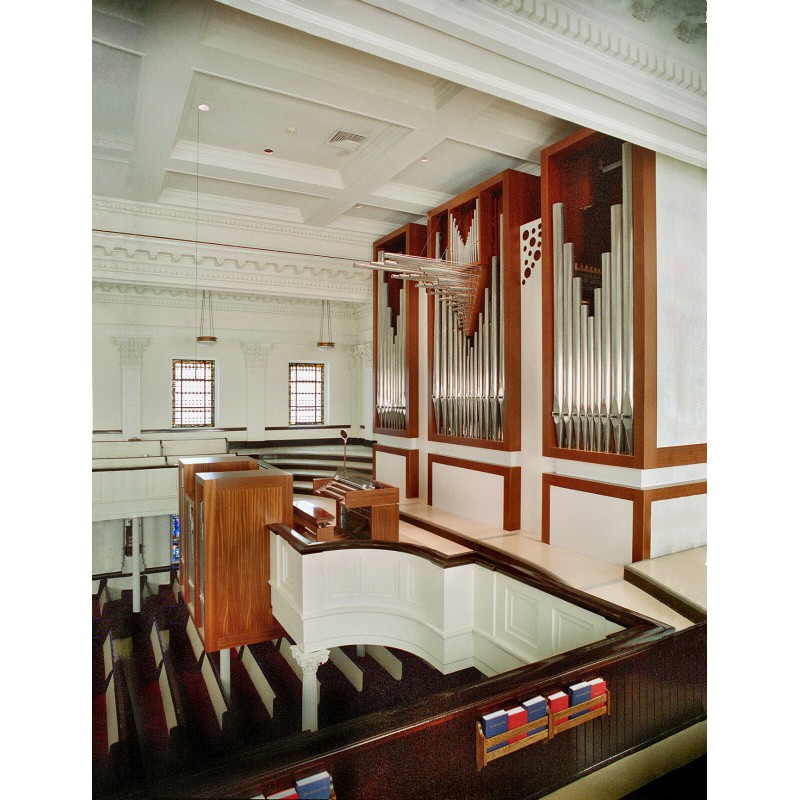
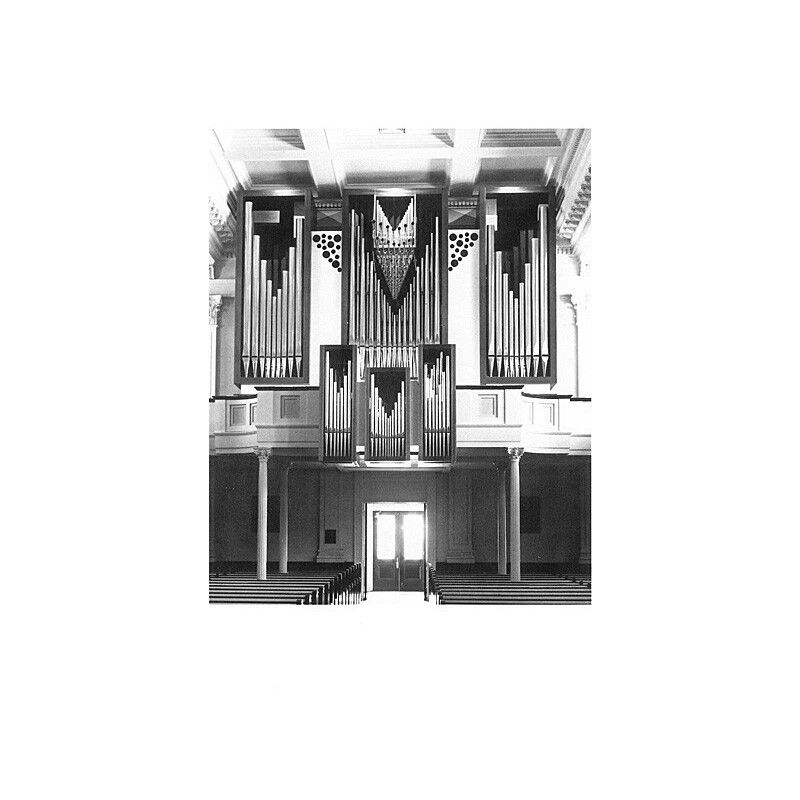
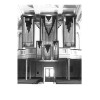
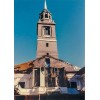
The organ recorded on these CDs was built for St. James’s Episcopal Church, Richmond, Virginia, by Rieger Orgelbau, Schwarzach, Austria. Installation was complete in 1974. It replaced the Austin Organ Company’s Op. 418 of four manuals and 40 stops. The Austin was in place when the current building opened in 1913. The Austin was rebuilt by a parishioner, then by Austin in 1953. The committee selecting a Rieger organ to replace the Austin was advised by Eugene Roan (1931-2006), chairman of the organ department at Westminster Choir College. A fire ignited by lightning on July 13, 1994, destroyed much of the church and the Rieger organ in its 20th year. The church rebuilt within the remaining walls in the same Georgian style, restoring many original artifacts, and installed C. B. Fisk Op. 112 of 1999 with three manuals and 62 ranks. St. James’s first building was completed in 1839 with a two-manual and pedal organ built by Henry Erben of New York. Erben replaced it in 1875 with a larger organ. The 1839 organ exists in storage.
The organ recorded on these CDs was built for St. James’s Episcopal Church, Richmond, Virginia, by Rieger Orgelbau, Schwarzach, Austria. Installation was complete in 1974. It replaced the Austin Organ Company’s Op. 418 of four manuals and 40 stops. The Austin was in place when the current building opened in 1913. The Austin was rebuilt by a parishioner, then by Austin in 1953. The committee selecting a Rieger organ to replace the Austin was advised by Eugene Roan (1931-2006), chairman of the organ department at Westminster Choir College. A fire ignited by lightning on July 13, 1994, destroyed much of the church and the Rieger organ in its 20th year. The church rebuilt within the remaining walls in the same Georgian style, restoring many original artifacts, and installed C. B. Fisk Op. 112 of 1999 with three manuals and 62 ranks. St. James’s first building was completed in 1839 with a two-manual and pedal organ built by Henry Erben of New York. Erben replaced it in 1875 with a larger organ. The 1839 organ exists in storage.
1974 Rieger Orgelbau, Schwarzach, Austria
St. James’s Episcopal Church, Richmond, Virginia
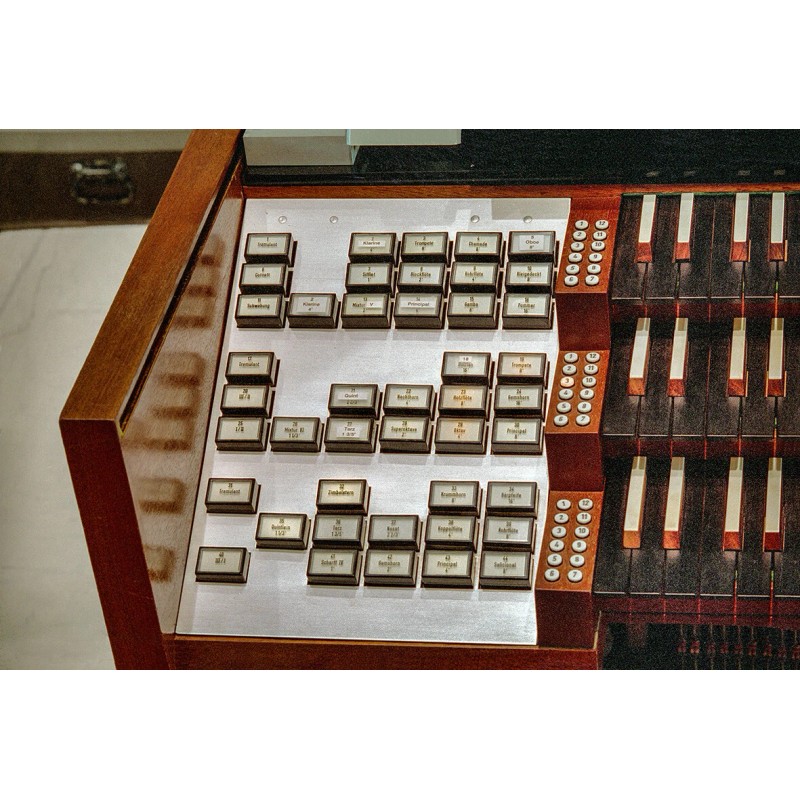
3 manuals, 49 stops, 84 ranks, 56-note manuals, 30-note Pedal
St. James’s Episcopal Church, Richmond, Virginia
3 manuals, 49 stops, 84 ranks, 56-note manuals, 30-note Pedal
II. Hauptwerk
16’ Gemshorn
8’ Principal
8’ Holzflöte
4’ Octav
4’ Nachthorn
2-2/3’ Sesquialter II (reduced from IV with cotton)
2’ Superoctav
1-1/3’ Quarte II
1-1/3’ Mixtur VI
8’ Trompete
4’ Trompete
Tremulant
I/II, III/II
16’ Gemshorn
8’ Principal
8’ Holzflöte
4’ Octav
4’ Nachthorn
2-2/3’ Sesquialter II (reduced from IV with cotton)
2’ Superoctav
1-1/3’ Quarte II
1-1/3’ Mixtur VI
8’ Trompete
4’ Trompete
Tremulant
I/II, III/II
I. Rückpositiv
8’ Salicional
8’ Rohrflöte
4’ Principal
4’ Koppelflöte
2-2/3’ Nasat
2’ Gemshorn
1-3/5’ Terz
1-1/3’ Quintlein
1’ Scharff IV
16’ Bärpfeife
8’ Krummhorn
Tremulant
Zimbelstern
III/I
III. Schwellwerk
16’ Pommer
8’ Bleigedackt
8’ Gamba
8’ Schwebung (TC)
4’ Holzprincipal
4’ Rohrflöte
2’ Blockflöte
1’ Sifflet
2’ Mixtur V-VII
1/3’ Zimbel IV
16’ Dulzian
8’ Musette
4’ Schalmei
8’ Chamade
8’ Cornett V (TG) mounted, façade
Tremulant
Pedal
16’ Principal
16’ Subbass
10-2/3’ Grossnasat (ext. Basszink)
8’ Octave (ext. Principal)
8’ Gedackt
5-1/3’ Basszink III
4’ Choralbass
2’ Nachthorn
2-2/3’ Rauschpfeife VI
32’ Sordun
16’ Fagott
8’ Posaune
I/P, II/P, III/P
mechanical key action
electric stop action
Combination
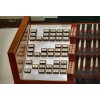
Action: electric, 12 small pistons per division in the left keycheeks;
12 Pedal pistons in the right keycheek of Manual I. Toe pistons for
Generals.| Isin: | I04IBRSWRISL |
|---|
Out of Stock
In Stock
Backordered
Out of Stock



IBspot Buyer Protection
Shop confidently on IBspot, receive your item as described or your money back for eligible orders. Learn Program Terms
GUARANTEED SAFE CHECKOUT
-

MONEY BACK GUARANTEE
30 days money back guarantee, no additional fee charged.
-

EXCELLENT SUPPORT
We provide 24/7 online customer support via email.
-

Fast Shipping
One week domestic shipping. Global delivery to the US in 2 weeks.
Raven OAR-173
George Bozeman and J. Bryan Dyker, organbuilders as well as super
musicians, combined as The Hot Air Duo (flute and organ). They
brilliantly performed live concerts in 1991 and 1992 with the 1974
Rieger (84 ranks) at St. James’s Episcopal Church, Richmond, Virginia.
The organ burned in 1994 and Bryan died the same year at age 37, the
youngest Organ Historical Society member when he joined at age 13.
FLUTE & ORGAN:
Everett Titcomb 1884-1968: The Hedding Suite
Allegro · Alla menuetto · Andante cantabile · Vivace (Scherzo)
Otto Nicolai 1810-1849: Potpourri from The Merry Wives of Windsor (arr. Hofmann)
Gabriel Fauré 1845-1924: Berceuse, op. 16
Maurice Ravel 1874-1937: Vocalise-Étude en forme de Habanera
Paul Hindemith 1895-1963: Echo
Heiter bewegt · Sehr langsam · Sehr lebhaft · Marsch
Allegro cantabile · Quieto · Animato
Very peaceful, quick · Slowly · Spirited movement · Very peaceful
No. 3, Life is Beautiful · No. 4, Where have you been, my little Lamb? · No. 6, The Tree of Life · Nos. 7 & 8, The Ferry Man and My new Boots have no Soles
FLUTE ALONE:
Robert Muczynski 1829-2010: Three Preludes for Flute Alone
Allegro · Andante molto · Allegro molto
Sigfrid Karg-Elert 1877-1933: Sonata Appassionata in F-sharp Minor for Solo Flute, op. 140
ORGAN ALONE:
Béla Bartók 1881-1945: Mikrokosmos (transcribed for organ by G. B.):
No. 2 of Six Dances in Bulgarian Rhythm, Vol. VI, 149
No. 5 of Six Dances in Bulgarian Rhythm, Vol. VI, 152
Fifth Chords, Vol. IV, 120
Vom Himmel hoch, da komm ich her:
Allegretto cantabile · Scherzando · Pastorale
Freuet euch, ihr Christen alle
Zengt an die Macht, du Arm des Herm
Sonne der Gerechtigkeit
The Music
by George Bozeman
The Music on CD 1:
Native of Amesbury, Massachusetts, Everett Titcomb (1864-1968) was organist and choirmaster at Saint John the Evangelist Church in Boston for much of his career. The Hedding Suite was composed at Camp Hedding, New Hampshire, where he spent many summers, and published in 1962. Titcomb writes: “Camp Hedding is a beautiful tract of woodland with hundreds of acres of lofty pines through which the wind and breezes make music. At the time the Suite was composed, the haunting tones of a flute played by Frances Drinker could be heard, creating a truly woodland symphony.”
A wealth of short salon pieces for flute and piano include the Fauré, Ravel, and Hindemith numbers, and their piano parts adapt effectively to the idiom of the organ. Gabriel Fauré (1845-1924) composed the Berceuse around 1879 for violin or cello and piano. Published in 1880 to a popular reception and widely played by various combinations of instruments, Fauré composed in 1880 a version for violin and orchestra.
by George Bozeman
The Music on CD 1:
Native of Amesbury, Massachusetts, Everett Titcomb (1864-1968) was organist and choirmaster at Saint John the Evangelist Church in Boston for much of his career. The Hedding Suite was composed at Camp Hedding, New Hampshire, where he spent many summers, and published in 1962. Titcomb writes: “Camp Hedding is a beautiful tract of woodland with hundreds of acres of lofty pines through which the wind and breezes make music. At the time the Suite was composed, the haunting tones of a flute played by Frances Drinker could be heard, creating a truly woodland symphony.”
A wealth of short salon pieces for flute and piano include the Fauré, Ravel, and Hindemith numbers, and their piano parts adapt effectively to the idiom of the organ. Gabriel Fauré (1845-1924) composed the Berceuse around 1879 for violin or cello and piano. Published in 1880 to a popular reception and widely played by various combinations of instruments, Fauré composed in 1880 a version for violin and orchestra.
Maurice Ravel (1875-1937) composed Vocalise-Étude en forme de Habanera for bass voice and piano in 1907 and published it in 1909.
Paul Hindemith (1895-1963) composed Echo for Flute and Clavier in 1942 and published in it in 1945.
Otto
Nicolai (1810-1849) ran away from an unhappy home in Königsberg,
Prussia, at the age of sixteen. Poorly educated in everything except
piano, he rose to become a popular composer of opera and a distinguished
conductor. He founded the Vienna Philharmonic Concerts in 1842 with
the object of giving fine performances of Beethoven’s Symphonies. In
1847, after a farewell concert to Vienna which included Jenny Lind’s
singing and excerpts from his Merry Wives of Windsor, he moved to
important positions in Berlin, where he completed his most famous
opera. It opened to brilliant success on March 9, 1849, but he had
scant time to enjoy it, dying of a stroke two months and two days later.
I found the Richard Hofmann (1844-1918) arrangement, published in
1894, in a second-hand store in Weimar several years ago; according to
advertisements printed with it, Hoffman published dozens of operatic Potpourris über beliebte Melodien aus klassichen und modernen Opern und Oratorien
(Potpourris on popular Melodies from classical and modern operas and
oratorios) arranged in 17 variations of instrumentation for solo or
groups of violin, two violins, viola, ‘cello, flute, and piano.
Robert
Muczynski (1929-2010) composed these three preludes in 1962. They, and
his Sonata for flute and piano from 1961, have become standard flute
repertoire among his many chamber music compositions. As well, his
orchestral works were widely performed by American orchestras. A native
of Chicago, he received undergraduate and graduate degrees in piano at
DePaul University, then taught composition at DePaul, as well as at
Roosevelt University, at Loras College in Dubuque, Iowa, and, from 1965,
at the University of Arizona-Tucson, where he was both chairman of
composition and composer-in-residence. His style is bright,
cheerful, and extremely effective for solo flute.
Ernst
Pepping was born in Duisburg, Germany, in 1901 and studied under Walter
Gmeindl at the Berlin High School for Music. After his appointment as a
professor at the School of Church Music in Spandau, near Berlin, he
devoted his composition largely to this field, and was considered the
leading exponent of new German Protestant church music. His Spandauer
Chorbuch written 1934-1938 comprises twenty volumes of choral pieces
for the liturgical year in two- to six-part settings. Pepping’s style in
the chorale preludes is free yet closely knit, and there is a certain
inherent archaism, all of which makes him a fine example of the
neo-baroque school. The Sonata for Flute and Clavier, composed 17 years
later, is somewhat less tonal in style.
The Music on CD 2:
In this program played by the Hot Air Duo in 1991, only the works by Kropfreiter and Karg-Elert were performed on the instruments specified by their composers. All the rest are transcriptions of one sort or another. We are always looking at familiar music with an eye to enriching our particular repertory for flute and organ.
The Music on CD 2:
In this program played by the Hot Air Duo in 1991, only the works by Kropfreiter and Karg-Elert were performed on the instruments specified by their composers. All the rest are transcriptions of one sort or another. We are always looking at familiar music with an eye to enriching our particular repertory for flute and organ.
Augustus
Franz Kropfreiter (1936-2003) was the organist at the large church of
the Augstinian monastery in St. Florian, where Anton Bruckner had been a
choir boy and, later, organist 1845-1855. Kropfreiter said
improvisation at the organ was “the most precious source of life and
often an inspiration for compositions.” His Four Pieces for Flute and
Organ, composed in 1962, begin and end with plainchant melodies and
provide fascinating and idiomatic interplays between the flute and
organ. He said that, ca. 1960, his compositions were influenced by
German Paul Hindemith (1895-1963), Swiss composer Frank Martin
(1890-1974), and Austrian Johann Nepomuk David (1895-1977), who had
been a choir boy at St. Florian and became a composition professor at
Stuttgart.
Sigfrid Karg-Elert (1877-1933) is
best known for his organ music. He grew up in Leipzig, was educated
there, and became professor at the Leipzig Conservatory. In 1932, he
visited America for a 3-month concert tour arranged by the Wurlitzer
company. After visiting in the home of Boston organbuilder E. M.
Skinner, Mrs. Skinner told of the fate of a new carpet in the guest
room, “He spent the week smoking in bed and tossing the butts on the
floor. When he left, the rug was full of holes.” Karg-Elert composed the
Sonata Appassionata for flute in 1910-1914 as influenced by
Schönberg, Debussy, and Scriabin, including in it a direct reference
to Scriabin’s one-movement piano sonatas.
Béla Bartók (1881-1945) wrote no organ music, but much of his work was inspired by eastern European folk music which is often played by wind ensembles. Such textures found in Mikrokosmos, Bartók’s monumental collection of 153 graded piano studies composed 1926 to 1939 and published in 1940, adapt easily and effectively to the organ.
Béla Bartók (1881-1945) wrote no organ music, but much of his work was inspired by eastern European folk music which is often played by wind ensembles. Such textures found in Mikrokosmos, Bartók’s monumental collection of 153 graded piano studies composed 1926 to 1939 and published in 1940, adapt easily and effectively to the organ.
I discovered Emil Petrovics’ Hungarian Children’s Songs
for flute and piano in a Dresden music store in 1989. We tried them
with flute and organ and chose several that were particularly effective
for a Fall, 1990, concert in New Hampshire. The titles of the songs are
printed in Hungarian, meaningless to us, so I called the Hungarian
Embassy in Washington, where a very nice lady translated them for me.
Emil Petrovics (1930-2011) composed three successful operas and two
ballets as well as oratorios, cantatas, and works in most other forms,
including a string quartet which brought him to international notice
when it won a prize the Liège Competition in 1959. He became a professor
at the Liszt Academy of Music in 1969 and director of the Hungarian
State Opera in 1986.
Paul Hindemith
(1895-1963) set himself the task of writing a sonata for every
orchestral instrument and piano. The Sonata for Flute and Clavier fits
beautifully on the organ and is one of his more ingratiating works. It
was composed in 1936 and was first performed in Washington, D. C., in
1937.
The Hot Air Duo
The title of this set of CDs reflects the sad fact that one of the performers is no longer with us and the organ heard here is gone as well.
J. Bryan Dyker was born May 28, 1956 in Annapolis, Maryland, and his family settled in Lovettsville, Virginia, in 1970. He was a gifted flutist and played as a member of the Richmond Symphony Orchestra 1979-1985. At Virginia Commonwealth University in Richmond, he majored in music, studying flute with Francile Bilyeu and organ with Ardyth Lohuis. With George Bozeman, he formed the Hot Air Duo which played across the United States and for several Organ Historical Society Conventions. He worked as an organbuilder for Jim Andrews Organbuilders of Richmond 1983-1984 and James R. McFarland & Co. of Millersville, Pennsylvania, 1977-1979. He served the Organ Historical Society as chairman of the Historic Organs Recitals Committee and had been its youngest member when he joined at age 13 while an organbuilding apprentice of James R. Baird of Herndon, Virginia. His last organbuilding position since 1985 was as chief voicer for George Bozeman, Jr. & Co. in Deerfield, New Hampshire. He died February 17, 1994, after a long illness.
The title of this set of CDs reflects the sad fact that one of the performers is no longer with us and the organ heard here is gone as well.
J. Bryan Dyker was born May 28, 1956 in Annapolis, Maryland, and his family settled in Lovettsville, Virginia, in 1970. He was a gifted flutist and played as a member of the Richmond Symphony Orchestra 1979-1985. At Virginia Commonwealth University in Richmond, he majored in music, studying flute with Francile Bilyeu and organ with Ardyth Lohuis. With George Bozeman, he formed the Hot Air Duo which played across the United States and for several Organ Historical Society Conventions. He worked as an organbuilder for Jim Andrews Organbuilders of Richmond 1983-1984 and James R. McFarland & Co. of Millersville, Pennsylvania, 1977-1979. He served the Organ Historical Society as chairman of the Historic Organs Recitals Committee and had been its youngest member when he joined at age 13 while an organbuilding apprentice of James R. Baird of Herndon, Virginia. His last organbuilding position since 1985 was as chief voicer for George Bozeman, Jr. & Co. in Deerfield, New Hampshire. He died February 17, 1994, after a long illness.
George Bozeman,
a native of Texas, studied with Helen Hewitt at North Texas State
College. In 1967 he received a Fulbright Grant and studied organ with
Anton Heiller and harpsichord with Isolde Ahlgrim at the Academy of
Music in Vienna. Bozeman began his career as an organbuilder with Otto
Hofmann of Austin, Texas, and later worked with Robert L. Sipe of Dallas
and Fritz Noack in Massachusetts. In 1971, he founded George Bozeman,
Jr. and Company, Organbuilders, in Lowell, Massachusetts. David Gibson
became a partner and project numbers 2-24 carry the name of
Bozeman-Gibson. In 1976, the firm moved to a solar-heated barn in
Deerfield, New Hampshire. In 1983, George Bozeman, Jr. became sole
proprietor, building and maintaining organs until his retirement in
2018. Throughout he has remained active as a church musician and serves
as Director of Music at the First Congregational Church in Pembroke, New
Hampshire. He has played recitals throughout the United States and in
Mexico, Canada, the Caribbean, and European. He is a member of the
Boston and New Hampshire chapters of the American Guild of Organists,
the Organ Historical Society (which he served as vice-president
1979-1983), the American Institute of Organ Builders, and the
International Society of Organbuilders. His articles have been published
in The Diapason, The American Organist and The Tracker.
The Rieger Organ
The organ recorded on these CDs was built for St. James’s Episcopal Church, Richmond, Virginia, by Rieger Orgelbau, Schwarzach, Austria. Installation was complete in 1974. It replaced the Austin Organ Company’s Op. 418 of four manuals and 40 stops. The Austin was in place when the current building opened in 1913. The Austin was rebuilt by a parishioner, then by Austin in 1953. The committee selecting a Rieger organ to replace the Austin was advised by Eugene Roan (1931-2006), chairman of the organ department at Westminster Choir College. A fire ignited by lightning on July 13, 1994, destroyed much of the church and the Rieger organ in its 20th year. The church rebuilt within the remaining walls in the same Georgian style, restoring many original artifacts, and installed C. B. Fisk Op. 112 of 1999 with three manuals and 62 ranks. St. James’s first building was completed in 1839 with a two-manual and pedal organ built by Henry Erben of New York. Erben replaced it in 1875 with a larger organ. The 1839 organ exists in storage.
The organ recorded on these CDs was built for St. James’s Episcopal Church, Richmond, Virginia, by Rieger Orgelbau, Schwarzach, Austria. Installation was complete in 1974. It replaced the Austin Organ Company’s Op. 418 of four manuals and 40 stops. The Austin was in place when the current building opened in 1913. The Austin was rebuilt by a parishioner, then by Austin in 1953. The committee selecting a Rieger organ to replace the Austin was advised by Eugene Roan (1931-2006), chairman of the organ department at Westminster Choir College. A fire ignited by lightning on July 13, 1994, destroyed much of the church and the Rieger organ in its 20th year. The church rebuilt within the remaining walls in the same Georgian style, restoring many original artifacts, and installed C. B. Fisk Op. 112 of 1999 with three manuals and 62 ranks. St. James’s first building was completed in 1839 with a two-manual and pedal organ built by Henry Erben of New York. Erben replaced it in 1875 with a larger organ. The 1839 organ exists in storage.
1974 Rieger Orgelbau, Schwarzach, Austria
St. James’s Episcopal Church, Richmond, Virginia
3 manuals, 49 stops, 84 ranks, 56-note manuals, 30-note Pedal
St. James’s Episcopal Church, Richmond, Virginia
3 manuals, 49 stops, 84 ranks, 56-note manuals, 30-note Pedal
II. Hauptwerk
16’ Gemshorn
8’ Principal
8’ Holzflöte
4’ Octav
4’ Nachthorn
2-2/3’ Sesquialter II (reduced from IV with cotton)
2’ Superoctav
1-1/3’ Quarte II
1-1/3’ Mixtur VI
8’ Trompete
4’ Trompete
Tremulant
I/II, III/II
16’ Gemshorn
8’ Principal
8’ Holzflöte
4’ Octav
4’ Nachthorn
2-2/3’ Sesquialter II (reduced from IV with cotton)
2’ Superoctav
1-1/3’ Quarte II
1-1/3’ Mixtur VI
8’ Trompete
4’ Trompete
Tremulant
I/II, III/II
I. Rückpositiv
8’ Salicional
8’ Rohrflöte
4’ Principal
4’ Koppelflöte
2-2/3’ Nasat
2’ Gemshorn
1-3/5’ Terz
1-1/3’ Quintlein
1’ Scharff IV
16’ Bärpfeife
8’ Krummhorn
Tremulant
Zimbelstern
III/I
III. Schwellwerk
16’ Pommer
8’ Bleigedackt
8’ Gamba
8’ Schwebung (TC)
4’ Holzprincipal
4’ Rohrflöte
2’ Blockflöte
1’ Sifflet
2’ Mixtur V-VII
1/3’ Zimbel IV
16’ Dulzian
8’ Musette
4’ Schalmei
8’ Chamade
8’ Cornett V (TG) mounted, façade
Tremulant
Pedal
16’ Principal
16’ Subbass
10-2/3’ Grossnasat (ext. Basszink)
8’ Octave (ext. Principal)
8’ Gedackt
5-1/3’ Basszink III
4’ Choralbass
2’ Nachthorn
2-2/3’ Rauschpfeife VI
32’ Sordun
16’ Fagott
8’ Posaune
I/P, II/P, III/P
mechanical key action
electric stop action
Combination
Action: electric, 12 small pistons per division in the left keycheeks;
12 Pedal pistons in the right keycheek of Manual I. Toe pistons for
Generals.- Format: CD
- Type: 2-CD set
- Record Label: Raven
- Genre: flute & organ, Classical
- Artist: J. Bryan Dyker, flute, George Bozeman, organ, Hot Air Duo
- Country/Region of Manufacture: United States
- Instrument: Flute, Organ
- Case Type: Jewel Case: Standard
- Release Title: Sounds Lost But Not Forgotten
- Release Year: 2021
- Sub-Genre: Pipe Organ Music
- UPC: 034069617329
Processing Time
- We process and ship orders Monday through Friday, excluding holidays.
- Most orders are processed within 1–3 business days, depending on product availability.
- Processing time does not include delivery time, which varies based on your location and the product’s shipping origin.
Shipping Coverage
We currently ship to addresses within the United States only.
Products may ship from:
- Our U.S. warehouses, or
- Our international fulfillment centers (including Korea, Japan, China, Australia, Mexico, Canada, the United Kingdom, and the EU).
Each product page clearly displays the “Ships From” location before checkout.
Shipping Methods & Estimated Delivery
| Shipping Method | Estimated Delivery | Cost |
|---|---|---|
| Free Shipping (US) | 5–10 business days | Free, available on eligible items |
| Standard Shipping (US to US by Item) | 5–10 business days | $6.50 for the first item, $2.00 each additional |
| Standard Shipping (From US Warehouse by Weight) | 3–7 business days | Starts at $6.50, increasing by $2 for every additional 4 oz (0.25 lb) up to 1 lb, then by $4 for each additional pound beyond 1 lb. |
| Extended Delivery (Ships from Overseas Warehouse) | 10–20 business days | $14.50 for the first item, $2.00 each additional |
Shipping costs vary by product weight, quantity and origin. Exact rates and delivery estimates are displayed on each product page and confirmed during checkout.
Free Shipping
We offer free standard shipping on select products or during promotional periods. Availability of free shipping will be displayed on the product page and at checkout.
Carriers
We primarily use USPS and UPS for U.S. deliveries. Items shipped from international warehouses may be handled by partner carriers depending on the country of origin.
Import Duties & Taxes
All import duties and taxes for goods imported into the United States are included in the product price. There are no hidden fees or additional charges at checkout.
Tracking & Notifications
Every order is fully trackable. You will receive a tracking number via email once your order ships. If your order ships in multiple packages, each package will have its own tracking number. If you don’t receive a shipping confirmation immediately, your order is still being processed and will arrive within the estimated timeframe shown at checkout.
You can track your shipment anytime using the Track Your Order page on our website.
Order Changes & Cancellations
If you need to modify or cancel an order, please contact our customer support team as soon as possible. Orders can only be canceled before they ship. Once shipped, cancellations are not possible, but you may request a return after the item is delivered.
Contact: support@ibspot.com
Item Not Received
If your tracking number shows “Delivered” but you haven’t received your package:
- Check with your local USPS or UPS office.
- Confirm that the shipping address provided was correct.
- If the issue remains unresolved, contact support@ibspot.com for assistance.
Damaged or Lost Parcels
If your package arrives damaged or fails to arrive, please contact us immediately. For deliveries to P.O. boxes, ibspot is not responsible for damage caused by weather, temperature, or theft.
Customer Support
For any questions about shipping, tracking, or delivery, our customer support team is here to help.
Email: support@ibspot.com
We’re always happy to help.
Please read our policy carefully before making a purchase.
We aim to ensure every customer has a smooth and transparent experience with ibspot.com.
Order Cancellation Policy
Customers may request to cancel an order before it has been shipped.
Once the package has been shipped, cancellations are no longer possible; however, you may still request a return after receiving your order.
How to Request a Cancellation
You can contact us through:
- Email: support@ibspot.com
- Contact Form: Submit a request through our Contact Us page
Please submit your cancellation request as soon as possible after placing the order to allow us to process it before shipment.
Return Policy
We accept returns for most items within 30 days of delivery for a full refund.
To be eligible for a return:
- The item must be unused, in the same condition as received, and in its original packaging.
- A tracking number must be provided to confirm the return shipment.
Non-Returnable Items
Certain products cannot be returned, including:
- Perishable goods (for example, food, flowers, newspapers, magazines)
- Intimate or sanitary goods
- Hazardous materials or flammable liquids/gases
- Gift cards
- Downloadable software
- Some health and personal care items
Partial Refunds (If Applicable)
Partial refunds may be granted in specific situations, such as:
- Books with obvious signs of use
- Opened CDs, DVDs, software, or vinyl records
- Items not in their original condition, damaged, or missing parts not due to our error
- Items returned more than 30 days after delivery
How to Return an Item
To initiate a return, please contact us at support@ibspot.com with your order number and details about the product you wish to return.
Our team will provide you with return instructions and a prepaid return label.
Shipping Cost for Returns
Please contact us before returning any item.
We will provide a free return shipping label.
If a return is sent back without prior contact or without our provided label, we cannot be held responsible for return shipping costs.
For items valued over $75, we recommend using a trackable shipping service or purchasing shipping insurance.
We cannot guarantee that we will receive your returned item if shipped independently.
Refund Processing
Once your return is received and inspected:
- In-store returns are refunded to the original form of payment or issued as a gift card.
- Mail-in returns using our prepaid label are refunded to the original payment method within 3–5 business days after we receive your return.
Please allow:
- 5–7 business days for the return to reach our Returns Center.
- An additional 3–10 business days for your bank to post the refund to your account.
Damages, Issues & Claims
Please inspect your order immediately upon receipt.
If you receive a defective, damaged, or incorrect item, contact us right away at support@ibspot.com.
We’ll evaluate the issue promptly and make it right.
Product Claims
Before purchasing, please review product details carefully.
If there is a problem with your order upon arrival, visit our Support Center or contact us directly to arrange return shipping or replacement.
Exchanges
We do not process direct exchanges.
The fastest way to get what you need is to return the original item and place a new order once your return is accepted.
Return Address
IBSPOT Return Center
15 Sawmill Ln
Dover Plains, NY 12522
United States
Customer Support
Our support team is available 24/7 to assist with cancellations, returns, or general inquiries.
Email: support@ibspot.com
Contact Form: Contact Us page

Oops!
Sorry, it looks like some products are not available in selected quantity.